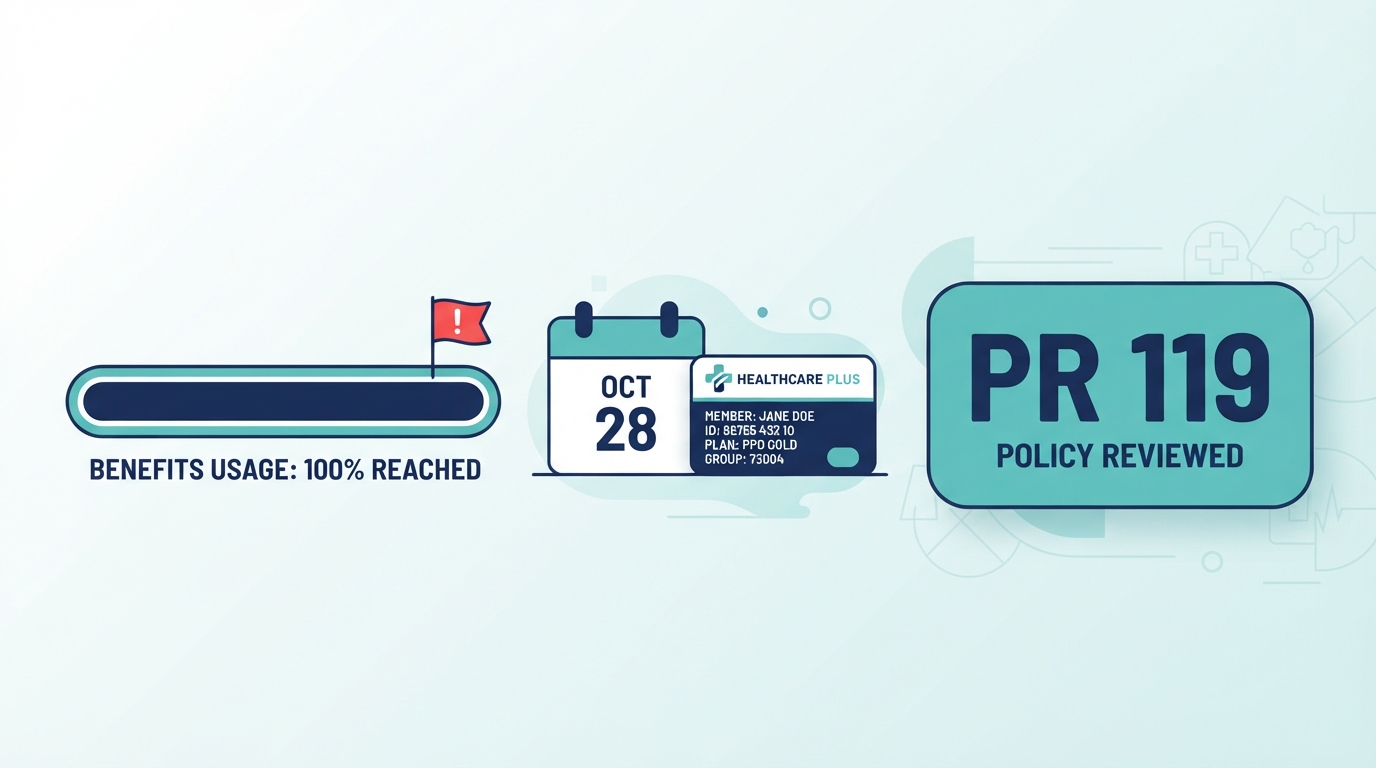
PR 119 reads "benefit maximum for this time period or occurrence has been reached." The patient's plan capped how much of this service it covers (visits, units, or dollars) and the cap has been hit. The PR group code means the balance is patient responsibility: billable to the patient, unlike a CO adjustment.
You will see this code written several ways depending on the payer and clearinghouse: PR 119, PR119, PR-119, or abbreviated on the remittance itself as "119-BENFT MAX 4 TIME PD/OCCURNCE PASSED." They all mean the same thing.
PR 119 at a Glance
| Question | Answer |
|---|---|
| Is it a true denial? | Yes; the plan won't pay this claim. |
| Can you bill the patient? | Usually yes, since the group code is PR. Check plan and state rules, and whether you gave any required notice. |
| Is it appealable? | Only if the payer's accumulator is wrong, which happens more than you'd think. |
| Who sees it most | Therapy (PT/OT/speech), behavioral health, chiropractic, DME, and vision: the specialties with visit caps. |
Common Scenarios Behind PR 119
- Visit-capped benefits: a plan covers 20 PT visits or 30 behavioral health sessions per year, and this claim was visit 21 or 31.
- Dollar maximums: annual caps on DME, orthotics, or specific benefit categories.
- Per-occurrence limits: a set number of services per episode, injury, or condition.
- Payer accumulator errors: visits from another provider counted twice, or the counter didn't reset with the new plan year.
How to Work a PR 119 Denial
- Verify the accumulator. Pull the plan's count of used visits or dollars and compare it against your records and the plan year. If the payer's math is wrong, appeal with dated documentation of actual utilization.
- Check for secondary coverage. Another plan may pick up services after the primary's cap.
- Bill the patient correctly. If the maximum was genuinely reached, move the balance to the patient with a clear statement referencing the exhausted benefit.
- Review notice requirements. Some plans and states require advance notice that a patient is approaching a benefit cap for the balance to be fully collectible.
Prevention Is Front-End Work
PR 119 is one of the most preventable denials in billing, because the information exists before the visit: benefit maximums and remaining counts are part of a real eligibility and benefits verification. Practices that track remaining visits per patient (the same discipline as authorization tracking) never discover a cap by delivering a free visit. That tracking is built into how we run billing for capped specialties like physical therapy, mental health, and chiropractic.
More codes: the complete denial codes list, CO 16, and CO 236.
Ready to Grow Your Practice?
Let Astral Medical Billing handle your revenue cycle and digital marketing.
Contact Us Today