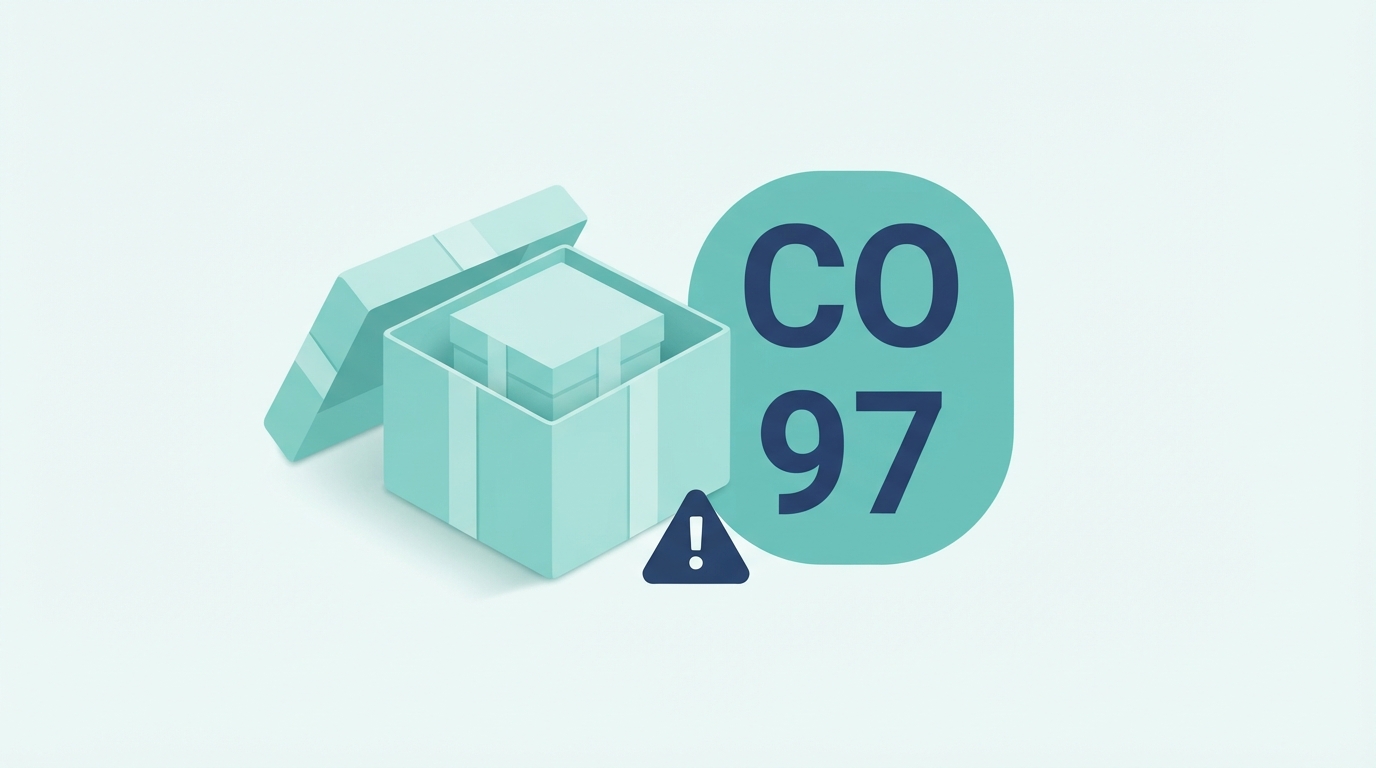
CO 97 reads "the benefit for this service is included in the payment/allowance for another service/procedure that has already been adjudicated." In plain English: the payer says this line item is part of something else it already paid, so it won't pay twice. Sometimes the payer is right and the coding was wrong. Sometimes the service was genuinely separate, and CO 97 is money you're owed.
CO 97 at a Glance
| Question | Answer |
|---|---|
| Is it a true denial? | Yes, for the bundled line. |
| Can you bill the patient? | No. CO means the practice absorbs it unless the claim is corrected. |
| Is it fixable? | Often. If the service was distinct, a modifier and documentation can unbundle it. |
| Root causes | NCCI bundling edits, the global surgical package, and missing modifiers 25/59/X. |
The Three Situations Behind CO 97
- NCCI bundling. Two codes billed the same day where one is considered part of the other (image guidance with an injection, a scope with a biopsy). If the NCCI edit's modifier indicator is "0", they can never be paid separately. If it's "1" and the services were genuinely distinct, modifier 59 or the X{EPSU} set applies.
- The global surgical package. E/M visits, dressing changes, and routine post-op care within a procedure's global period (0, 10, or 90 days) are included in the surgical payment. Billing them separately draws CO 97 unless a modifier (24 for unrelated E/M, 58/78/79 for staged, related, or unrelated procedures) tells the payer why this one is different.
- E/M with a procedure, no modifier 25. A significant, separately identifiable evaluation on the same day as a minor procedure is billable, but only with modifier 25 and documentation that separates the two. Without it, the visit bundles into the procedure.
How to Work a CO 97 Denial
- Identify what it bundled into. Find the paid "parent" procedure on the same date (or within the global period).
- Check the edit. Look up the code pair in the current NCCI tables, or the procedure's global period indicator. This tells you if unbundling is even possible.
- Review the documentation. Was the service genuinely separate: different site, different session, unrelated problem? If yes, add the correct modifier and resubmit as a corrected claim. If no, post the adjustment and fix the coding habit.
- Appeal with records when the payer's edit misfired. Payers apply bundling edits by automation, and automation misreads claims. Documentation-backed appeals on legitimately distinct services win regularly.
Prevention
CO 97 is a claim-scrubbing and coding-discipline problem. Claims checked against current NCCI edits and global-period status before submission simply don't generate it, and modifiers applied from documentation (never routinely) keep the wins you do claim audit-proof. That pre-submission discipline is standard in our billing and coding service, and repeat CO 97 patterns feed back into provider education through our denial management workflow.
More from the library: the complete denial codes list, CO 236 (incompatible procedure combos), and CO 45 (fee schedule adjustments), and CO 50 (medical necessity).
Ready to Grow Your Practice?
Let Astral Medical Billing handle your revenue cycle and digital marketing.
Contact Us Today