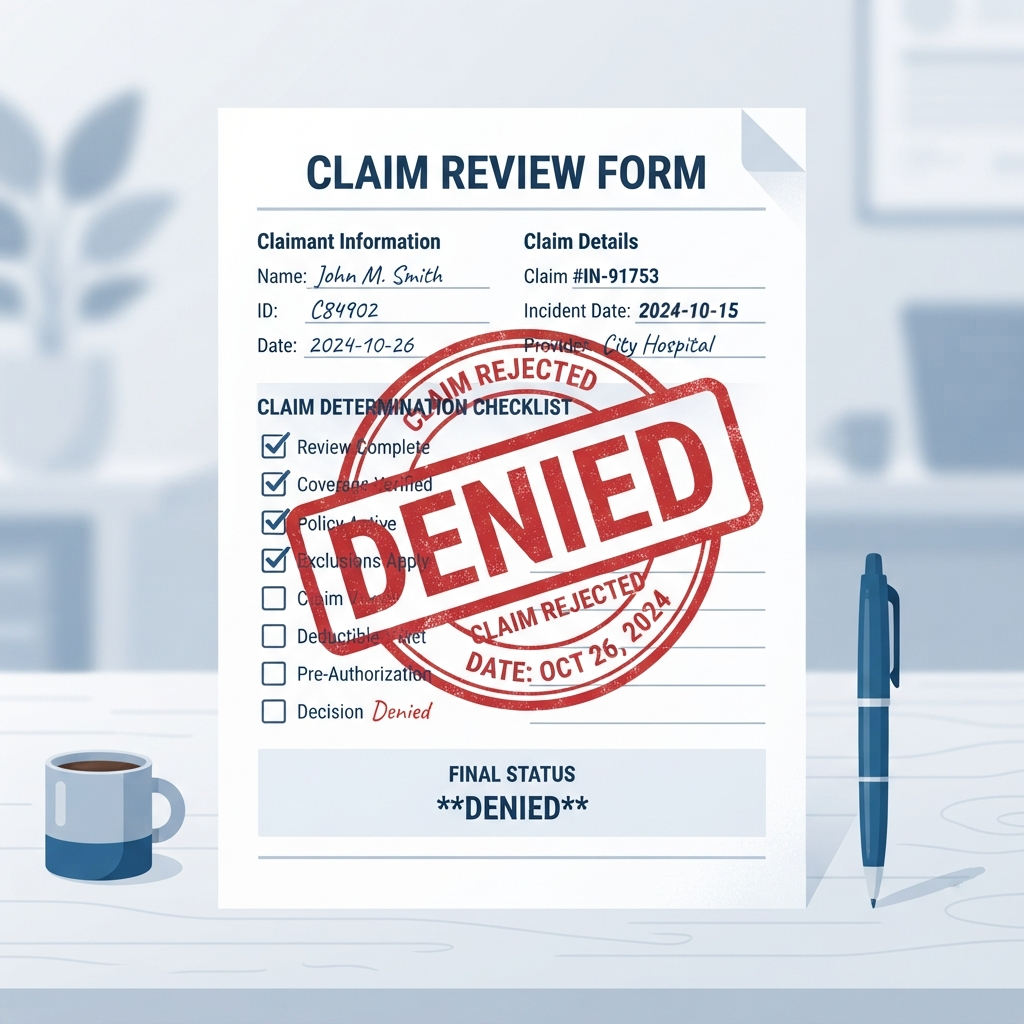
Every denied claim comes back with a code attached. That code is not just bureaucratic noise. It tells you exactly why the payer refused to pay, and once you understand the most frequent codes, you can fix the root causes instead of reworking the same denials month after month.
Industry data consistently shows that a large share of denials come from a small group of recurring codes. Master these ten and you cover most of the denials a typical small practice will ever see.
First, a Quick Refresher: CO vs PR vs OA
Denial codes start with a group code that tells you who is responsible for the balance:
CO (Contractual Obligation): The provider absorbs the cost. You cannot bill the patient.
PR (Patient Responsibility): The balance shifts to the patient, such as deductibles and copays.
OA (Other Adjustment): Used when no other group code applies, often in coordination of benefits situations.
Now let's get into the codes themselves.
1. CO-45: Charge Exceeds Fee Schedule
This is one of the most common adjustment codes in existence. It means your billed amount is higher than the payer's contracted rate, so the difference gets written off.
How to fix it: In most cases there is nothing to appeal. This is a contractual write-off. The real action item is reviewing your fee schedule annually. If you are seeing large CO-45 adjustments across the board, your charges may be badly out of sync with your contracts, or it may be time to renegotiate payer rates.
2. CO-97: Service Bundled Into Another Procedure
The payer considers this service already included in the payment for another procedure performed on the same day.
How to fix it: Check NCCI edits before billing. If the services were genuinely separate and distinct, resubmit with the appropriate modifier (often modifier 59 or the X modifiers) and documentation that supports unbundling. If they were correctly bundled, write it off and adjust your charge entry process.
3. CO-16: Claim Lacks Required Information
This is a catch-all code that means something is missing or invalid on the claim. It usually arrives with a remark code that points to the specific problem, such as a missing NPI, invalid diagnosis pointer, or incomplete patient information.
How to fix it: Read the accompanying remark code, correct the specific field, and resubmit. To prevent it, tighten your claim scrubbing process so incomplete claims never leave your system in the first place.
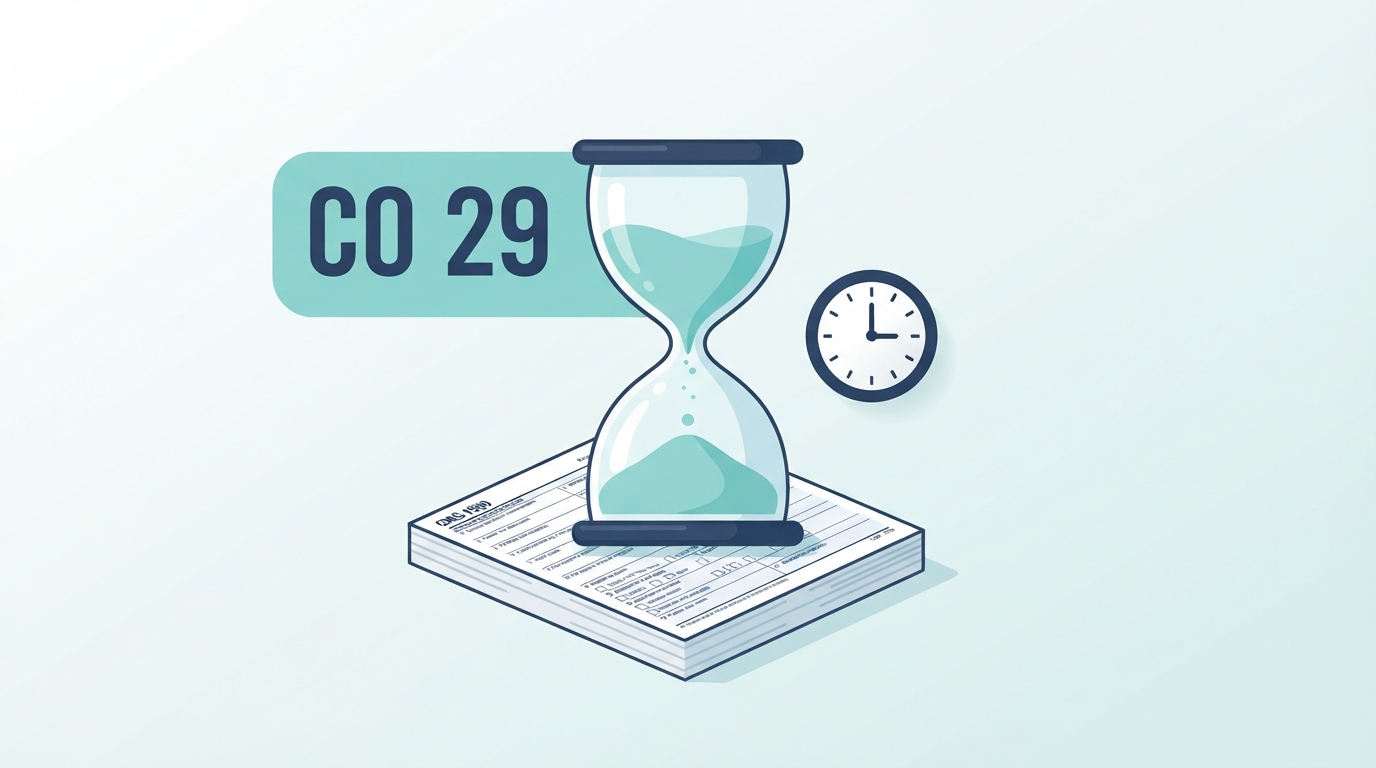
4. CO-29: Timely Filing Limit Expired
The claim was submitted after the payer's filing deadline. These deadlines range from 90 days to a year depending on the payer.
How to fix it: If you have proof of timely submission, such as a clearinghouse acceptance report, appeal with that documentation. If the claim genuinely missed the deadline, it is usually a write-off, and you cannot bill the patient for it. Prevention is everything here: track filing deadlines by payer and work claims within days of the date of service, not weeks.
5. CO-22: Coordination of Benefits Issue
The payer believes another insurance is primary. This happens constantly with patients who have multiple coverages, Medicare plus a supplement, or a recent change in employment.
How to fix it: Contact the patient to confirm current coverage and which plan is primary, then bill the correct payer in the correct order. Prevent it by verifying coordination of benefits at every visit, not just the first one.
6. PR-1: Deductible Amount
Not technically an error. The claim processed correctly, but the allowed amount went to the patient's unmet deductible.
How to fix it: Bill the patient promptly. The biggest mistake practices make with PR-1 is letting these balances sit. Verify deductible status during eligibility checks so you can collect at the time of service instead of chasing statements later.
7. CO-50: Not Medically Necessary
The payer decided the service was not medically necessary based on the diagnosis submitted. This is common with screenings, injections, and services that have strict coverage criteria.
How to fix it: Review the payer's coverage policy (LCD or NCD for Medicare). If the documentation supports medical necessity, appeal with clinical notes. Often the real issue is a diagnosis code that does not match the payer's covered indications, which means the fix is coding accuracy, not an appeal.
8. CO-18: Duplicate Claim
The payer already received this claim. Sometimes it really is a duplicate submission, but often it is a resubmission that was not marked as a corrected claim.
How to fix it: Before resubmitting anything, check claim status first. If you need to send a corrected claim, use the proper frequency code (7 for replacement) instead of submitting a fresh claim. Blind resubmissions are one of the fastest ways to clog your own AR.
9. CO-167: Diagnosis Not Covered
The diagnosis code on the claim is not covered under the patient's plan for this service.
How to fix it: Verify the diagnosis was coded to the highest specificity and actually reflects the documentation. If a more accurate code exists, correct and resubmit. If the service truly is not covered for that diagnosis, this is a conversation to have with patients before the service, ideally with an ABN or waiver on file.
10. CO-197: Missing Prior Authorization
The service required prior authorization and none was on file, or the authorization did not match the service performed.
How to fix it: Some payers allow retro-authorization within a short window, so call immediately. If retro-auth is denied, appeal with documentation of medical necessity. Prevention is the real answer: build authorization checks into your scheduling workflow so no auth-required service ever gets performed without one.
The Pattern Behind All of These
Look back through the list and you will notice something. Almost every one of these denials traces back to front-end processes: eligibility verification, accurate coding, clean claim submission, and authorization tracking. Denials are rarely random. They are the downstream symptom of upstream gaps.
That is why effective claim denial management is not just about working denials faster. It is about analyzing your denial codes monthly, spotting the patterns, and fixing the process that keeps producing them.
When to Get Help
If your team is spending hours every week reworking the same denial codes, the math usually favors outsourcing. A dedicated billing partner tracks every denial, appeals what is winnable, and fixes the root causes so your denial rate drops over time. Our medical billing and coding team does exactly that for small and independent practices across the country.
Want to know what your denial patterns are costing you? Reach out to Astral Medical Billing for a free billing review and we will show you exactly where your revenue is leaking.
Ready to Grow Your Practice?
Let Astral Medical Billing handle your revenue cycle and digital marketing.
Contact Us Today