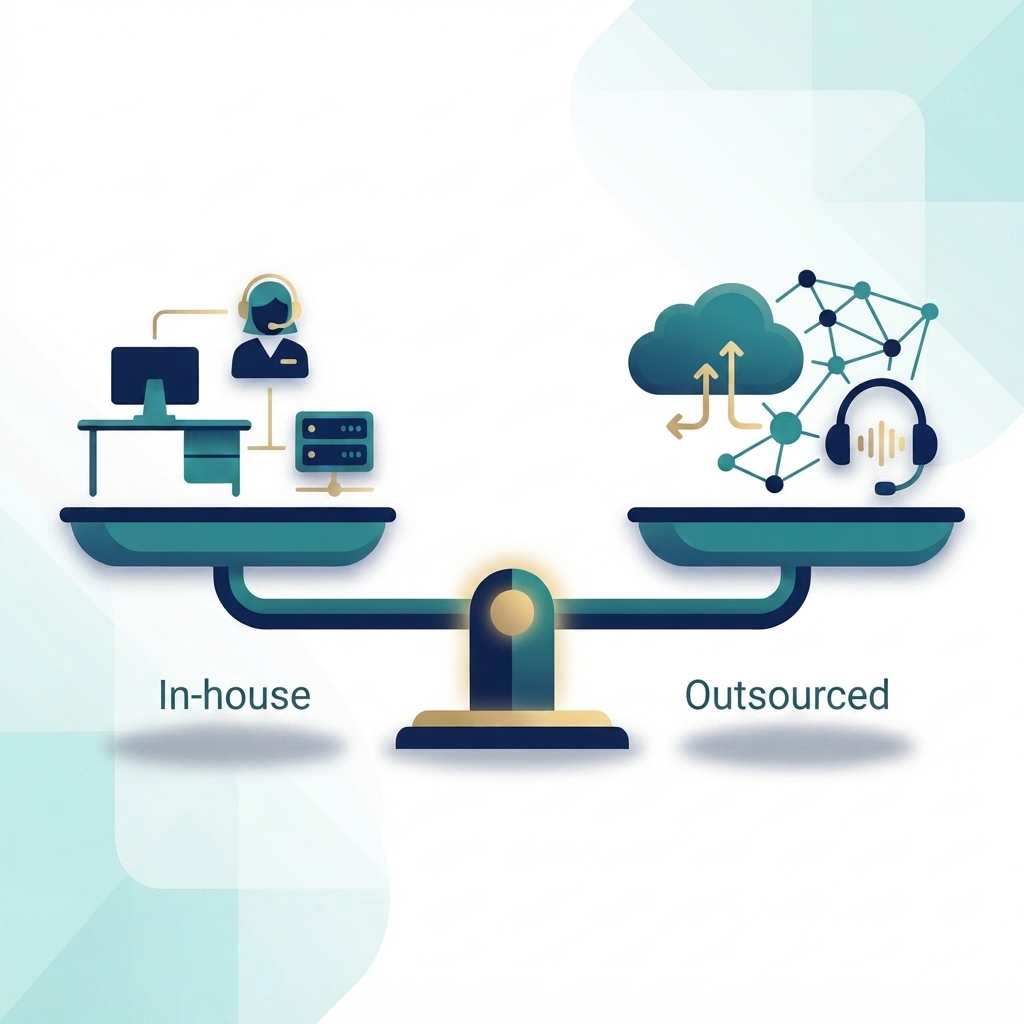
Every practice owner runs this math eventually: keep billing in-house with your own staff, or hand it to a billing company for a percentage of collections? The sticker prices are easy to find. The true costs (turnover, unworked denials, software stacks, and coverage gaps) are where the comparison is actually decided.
The True Cost of In-House Billing
For a typical independent practice with one dedicated biller:
| Cost Item | Typical Annual Cost |
|---|---|
| Biller salary | $42,000–$58,000 |
| Payroll taxes & benefits (~20–30%) | $8,000–$17,000 |
| Billing software & clearinghouse fees | $3,000–$10,000 |
| Training, certification & compliance updates | $1,500–$4,000 |
| Recruiting & turnover (amortized) | $2,000–$6,000 |
| Total | $56,500–$95,000 |
And that's the visible cost. The invisible one is bigger: one person can't verify eligibility, post payments, work denials, appeal underpayments, and chase aging AR at the same time. Something always slips, usually denial follow-up, because it's the hardest work with the least visible deadline. Denied claims that miss timely-filing windows aren't delayed revenue; they're gone.
The Cost of Outsourced Billing
Outsourced billing is typically priced at 3–8% of monthly collections (see our full breakdown of medical billing costs and pricing models). For a practice collecting $70,000/month, that's roughly $25,000–$67,000 a year, and it replaces salary, benefits, software, training, and turnover risk in one line item that scales with revenue.
Head-to-Head Comparison
| Factor | In-House | Outsourced |
|---|---|---|
| Annual cost (typical small practice) | $56K–$95K fixed | 3–8% of collections |
| Coverage for vacation / sick / turnover | Billing stops | Team-based, no gaps |
| Denial & appeals capacity | Whatever time is left | Dedicated denial workflow |
| Payer rule & code updates | Your biller's homework | Built into the service |
| Reporting | Rare in practice | Monthly KPI reports |
| Control & oversight | Direct | Real-time, if they work in your EHR |
| Scales with growth | New hire per ~2–3 providers | Automatic |
When In-House Still Makes Sense
- You're a large group with enough volume to staff a full billing department, with specialists for eligibility, denials, and AR, plus management to run it.
- You have an exceptional biller you trust, backup coverage, and the reports prove it: 95%+ clean claims, AR under 40 days, net collections above 96%.
- Your billing is unusually niche and you've already built the in-house expertise (though specialty billing companies exist for almost every niche now).
When Outsourcing Wins
- You're a solo or small group practice. You can't hire one person who is excellent at five different billing jobs, and you shouldn't have to.
- Your biller just left (or will eventually). Re-hiring and re-training every couple of years is a recurring tax on the practice.
- The numbers say so: clean claim rate under 90%, AR days over 50, or denials being written off instead of appealed.
- You're growing. A new provider or location shouldn't require a billing hire before it produces revenue.
Run Your Own Numbers
Three checks tell you most of what you need to know:
- Measure your clean claim rate: below 95% means claims are bouncing that shouldn't.
- Measure your days in AR: over 40 to 50 days means money is aging toward write-off.
- Run both sides through our free billing cost savings calculator: it totals your in-house cost (salary, benefits, software, turnover) and compares it against any outsourced percentage.
- Add up your true in-house cost from the table above and divide by annual collections. That's your effective in-house "percentage rate." Practices are often surprised to find it's higher than an outsourced quote.
The Bottom Line
In-house billing is a fixed cost with single-point-of-failure risk; outsourced billing is a variable cost with aligned incentives. For most independent practices, the fully loaded in-house rate is higher than an outsourced percentage, even before counting the extra revenue a dedicated denial-and-AR team recovers.
Curious what the switch looks like in practice? See how our outsourced medical billing service handles the transition without cash-flow gaps, or get a free billing assessment that benchmarks your current numbers against the 95% clean-claim and 40-day AR standards.
Ready to Grow Your Practice?
Let Astral Medical Billing handle your revenue cycle and digital marketing.
Contact Us Today